How to Change YouTube Language to English (Interface, Titles, Captions, Audio)
If you want to change YouTube language to English, first check which part of YouTube is actually in the wrong language. YouTube has four separate language layers: the interface (menus and buttons), video titles, captions, and the audio track. Each has its own control, so switching the interface to English leaves a dubbed Spanish voice exactly where it was, and picking the original audio does nothing for German menus.
| What is in the wrong language | Where it is controlled | Covered in |
|---|---|---|
| Interface: menus, buttons, the sidebar | The Language setting in YouTube, influenced by your Google Account language | This page, next section |
| Video titles | Google Account languages, your browser's page translation, the region YouTube infers | Why does YouTube translate video titles |
| Captions | The player: CC icon and the gear menu | YouTube subtitle translator |
| Audio track (the voice you hear) | The player: gear icon, then Audio track | Why is YouTube translating video audio |
My YouTube is in a different language: which layer is it?
"My youtube is in a different language" can mean any of four problems, and the fix for one does nothing for the others. It takes a few seconds to tell them apart.
Look at the words YouTube itself writes: the search box placeholder, the Home and Subscriptions labels, the text in the settings menu. If those are foreign, the interface is wrong. Go to the interface section below.
Then check a video title from a channel you know. If an English creator's title now shows up in French while the menus are fine, YouTube is translating titles. That is a separate system, and the interface setting will not stop it.
Play a video. If the voice speaks a language the creator does not speak, you are hearing a dubbed audio track. If the voice is right but the text at the bottom of the screen is foreign, the captions are set to another language.
Several of these often go wrong at the same time, and then a single fix looks like it did nothing. Change one layer, check, then move to the next.
Change the YouTube interface language to English
This setting decides the language of menus, buttons and system text. It does not translate titles, captions or audio.
On desktop, open YouTube in your browser, click your profile picture at the top right (or the settings menu if you are signed out), and look for the Language entry. Choose English from the list and the menus switch over.
In the mobile app, open the app's settings and look for a language option there. If you cannot find one, the app may simply be following your phone's own system language, so check the language set on the device as well.
If English does not stick, check the language on your Google Account. YouTube can pick up the account's language, so a Google Account set to another language can pull the interface back after you sign in on a new device or clear your browser data. Set the account language to English and add any other languages you read. That second part also matters for titles, as the table above shows.
YouTube renames and moves these menus from one redesign to the next, so treat the steps above as directions to the right area rather than exact labels.
Why YouTube in another language happens in the first place
When you see YouTube in another language without having touched a setting, one of these is usually behind it.
A shared or new Google account. Someone else in the household set up the account, or you signed into a fresh account whose language was chosen during setup. YouTube follows that account's settings, so the fix lives there.
A location change or a VPN. YouTube infers a region from where your connection appears to come from. After a trip abroad, or with a VPN pointed at another country, YouTube may treat you as a viewer in that country and translate titles accordingly. Turning the VPN off or pointing it at your home country is worth a try.
The browser translating the page on top of YouTube. Chrome can translate whole web pages, and if it has been told to translate English pages into another language (or to always translate a language), it rewrites YouTube's menus and titles after YouTube has served them in English. In Chrome, check the "Use Google Translate" setting and the translate icon in the address bar. If turning that off brings the English back, the fix belongs in Chrome and YouTube's settings can stay as they are.
Captions in the wrong language
Captions are controlled in the player, per video, and have nothing to do with the interface setting. On desktop, click the CC icon to turn captions on, then click the gear icon, choose Subtitles/CC, and pick the track you want. If the video has a caption track in another language, choose Auto-translate and then English. In the mobile app the path is the CC icon, then Captions, then Auto-translate, then the language.
Auto-translate shows up only when the video has a caption track at all. More on how that works, and on its limits, in the YouTube subtitle translator guide.
Audio in the wrong language
If the voice is in the wrong language, you are probably hearing a dubbed audio track. Creators can let YouTube generate AI-dubbed tracks in other languages, and YouTube picks the track that matches your language preference, then remembers that choice for future videos.
To get the original voice back, click the gear icon, choose Audio track, and pick the entry marked "(original)", for example "English (original)". YouTube labels which tracks are auto-dubbed and which the creator uploaded. There is no viewer switch to turn auto-dubbing off everywhere; you change it per video. The full explanation is in why is YouTube translating video audio.
Titles in the wrong language
YouTube machine-translates titles for some viewers, and there is no single toggle to switch that off. What helps: adding the languages you understand to your Google Account language settings, making sure Chrome's page translation is not the thing rewriting the page, and checking whether a VPN is changing the region YouTube thinks you are in. The details are in why does YouTube translate video titles.
If the video itself is in another language
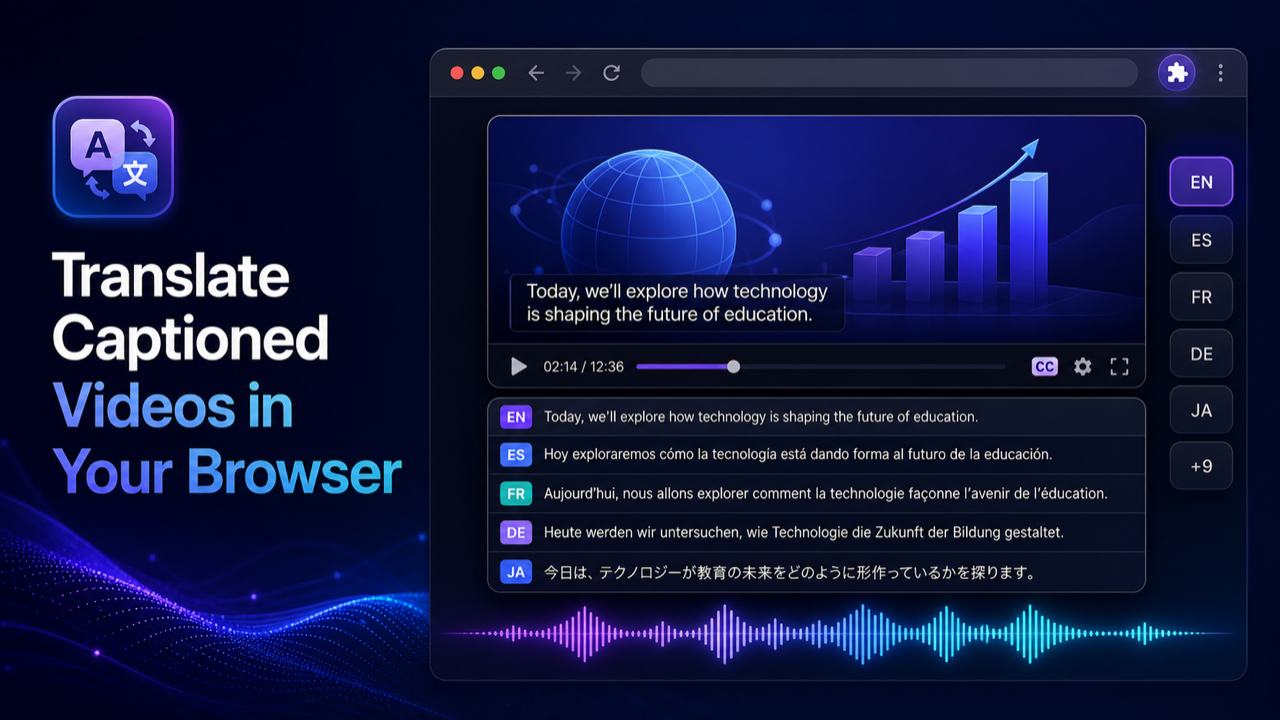
Everything above is about YouTube showing you the wrong language. A different problem is a video that was recorded in a language you do not speak and has no English version at all. Auto-translated captions are the free route. If you would rather listen, the Unlimited YouTube AI Video Translator is a desktop Chrome extension that reads the video's existing caption track, translates it and plays AI voice dubbing over the original audio, with translated subtitles if you want them. It needs a caption track to work; it does not transcribe audio on its own, and it does not run in the mobile app. The walkthrough is in how to translate a YouTube video to English, and the wider set of options is in the YouTube video translator guide.
Related guides
- Why is YouTube translating video audio
- Why does YouTube translate video titles
- YouTube subtitle translator
- Translate a YouTube video to English
- Translate a YouTube video to English without CC
Frequently asked questions
Does changing the interface language change video titles?
No. The interface setting controls menus and buttons. Title translation depends on your Google Account languages, your browser's page translation and the region YouTube infers, so it has to be handled separately.
Why did my YouTube switch languages on its own?
Usually because something around it changed: you signed into a different Google account, a VPN or trip changed your apparent location, or Chrome started translating the page. Check those three before digging into YouTube's own settings.
Can I turn off auto-dubbing for every video?
Not as a viewer. You pick the "(original)" entry under Audio track for each video, and YouTube remembers your preference for later videos. Creators can switch auto-dubbing off for their own channel in YouTube Studio under Settings, Channel, Advanced settings, by unticking "Allow automatic dubbing" and saving.
How do I get English captions on a foreign video?
Turn captions on with the CC icon, then go to the gear icon, Subtitles/CC, Auto-translate and choose English. That entry appears only if the video has a caption track to translate from.
Is the interface language the same on my phone and my computer?
Not necessarily. The desktop site uses the Language setting in YouTube, while the app may follow the app's own settings or your phone's system language. If they disagree, set English on both and on your Google Account.