
Why Does YouTube Translate Video Titles? What Actually Changes It
YouTube machine-translates video titles for some viewers, based on what it thinks your language is. There is no single YouTube switch that turns this off, so you fix it by correcting what YouTube believes about you.
So when people ask why does youtube translate video titles they can read perfectly well, the answer is that YouTube guessed wrong about their languages. The rest of this page covers what feeds that guess, why it only hits some videos, and the three settings that change it.
Why is YouTube translating video titles for me?
YouTube looks at what it knows about you, mainly the languages attached to your Google Account and the region it infers from your connection. When a title is in a language it does not think you read, it may show you a machine translation. That is why is youtube translating video titles for someone who never asked: nothing in their account said they read the original language.
People who read more than one language get this most. Say your account lists only Spanish and you watch a lot of English videos. YouTube has no record that you read English, so English titles are fair game for translation into Spanish.
Title language is also its own setting. YouTube treats interface language, title language, caption language and audio-track language as four separate things, and changing one leaves the others alone. Switching the YouTube interface to English can leave every translated title exactly as it was.
Why does YouTube translate some video titles and not others?
Your home feed is usually a mix. One title is translated, the next is in the original, and a third reads naturally in your language and does not look machine-made at all. That mix is why people search why does youtube translate some video titles: it looks like a bug.
Those are three different kinds of title. In the first case the channel wrote its own title in your language, which is why it reads well. In the second, no creator version exists for your language, so YouTube generated one, and these are the stiff or plainly wrong titles people complain about. In the third, YouTube left the original alone, either because it thinks you read that language or because it did not translate that video.
Which one you get depends on what your account says you understand. A title in a language listed in your Google Account has a good reason to stay as written. A title in a language that is not listed is more likely to get a machine version, because YouTube has no evidence you read it.
Is there a YouTube video title translation disable option?
No. If you searched youtube video title translation disable hoping for a checkbox, you can stop looking. Viewers get no setting that turns title translation off, not in the player, the gear menu or the YouTube settings pages.
YouTube does use three inputs to make its guess, and you can change all of them. Doing so reduces translated titles. None of them is a guaranteed off switch, and an occasional translated title can still get through after you change all three.
How to stop YouTube translating video titles, as far as you can
1. Add every language you read to your Google Account
Do this first; it is the most reliable of the three. Open your Google Account settings, find the language section, and add every language you are comfortable reading, not only your main one. YouTube checks this list when it decides whether you need a translation.
A title in a language on your list gives YouTube a reason to leave it alone. A title in a language missing from the list is where you see youtube translating video titles into your primary language. Adding English, for example, tells YouTube you do not need English titles rewritten.
Reload YouTube after the change. The setting belongs to your Google Account, so it applies wherever you are signed in with that account.
2. Make sure it is YouTube and not Chrome doing the translating
Sometimes YouTube is not the one translating. Chrome can translate whole web pages, and if it has been set to translate a language automatically, it rewrites YouTube titles along with everything else on the page.
You can tell them apart by how much of the page changes. YouTube's title translation touches titles; the buttons and menus stay in your interface language, and comments stay in whatever language the commenters wrote them in. Chrome's page translation changes all of it, comments included. If the whole page has switched, check Chrome's "Use Google Translate" setting in its language settings and turn off automatic translation for that language.
When Chrome is the cause, this fixes it completely. When it is not, it changes nothing.
3. Check whether a VPN is changing your region
YouTube infers your region from your connection. A VPN exit in another country can make YouTube assume you read that country's language and translate titles toward it. If translated titles started around the time you began using a VPN, or they come and go as you switch servers, try with the VPN off, or pick a server in a country whose language you read.
Of the three, this one is the least predictable, since region is only one of the signals YouTube uses.
What creators can do about translated titles
Channel owners have more control here than viewers do. Creators can add their own title translations for other languages, and when a creator-provided translation exists for a viewer's language, the viewer sees it instead of a machine one.
If your viewers are seeing awkward machine titles, write proper translated titles for the languages most of your audience speaks. YouTube can still machine-translate titles into languages you have not covered, but wherever you supply your own translation, it replaces the machine version.
Titles are one thing, audio and interface are others
Translated titles often arrive together with two related surprises, and each has its own fix:
- The video plays in a dubbed voice instead of the original. That is YouTube auto-dubbing, which you switch back per video through the audio track menu. See why is YouTube translating video audio.
- The whole YouTube interface is in the wrong language. That is the interface language setting, covered in how to change YouTube language to English.
The Google Account language fix above does not reset either of those.
The opposite case: you want a video translated
Some readers land here wanting the reverse: to youtube translate video titles and the video itself, because the content is in a language they do not know. YouTube's own tools cover the basics. Turn on CC, open the gear icon, then Subtitles/CC, then Auto-translate, and pick your language. Auto-translate appears only when the video has a caption track.
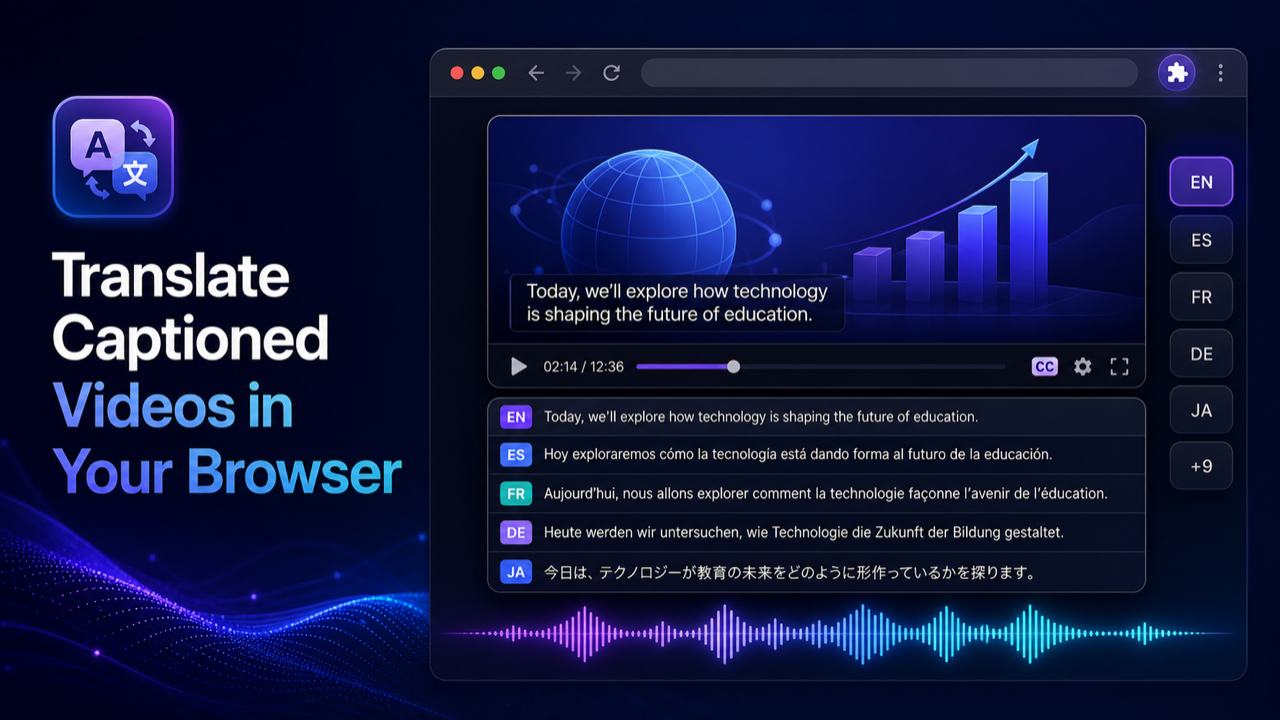
If you would rather listen than read, my Chrome extension Unlimited YouTube AI Video Translator reads the video's existing caption track, translates it, and plays AI dubbing over the original audio or shows translated subtitles, in desktop Chrome. It does not change titles, so it is no fix for anything above, and it does not work on videos without a caption track. Other ways to translate a video are in the YouTube video translator guide.
Related guides
- Why is YouTube translating video audio
- How to change YouTube language to English
- Chrome extension to translate YouTube videos
- YouTube subtitle translator
- Translate YouTube video to English
Frequently asked questions
Why does YouTube translate video titles into my language when I understand the original?
YouTube does not know you understand it. It decides from your Google Account languages and the region it infers, and if the original language is not among them, it may show a machine translation. Adding that language to your Google Account is the most reliable way to correct it.
Can I turn off YouTube title translation completely?
No. YouTube has no single setting for it. You can reduce it by adding the languages you read to your Google Account, ruling out Chrome's page translation and checking your VPN, but none of these is a hard switch.
Why do only some titles get translated?
Some videos have a translated title written by the creator, some get a machine translation, and some are shown in the original. Which one you see depends on the video and on the languages your account lists.
Does changing the YouTube interface language stop translated titles?
Not by itself. Interface language, title language, caption language and audio-track language are four separate settings, so changing the interface language leaves titles to the other signals YouTube uses.
How do I know if Chrome is translating YouTube instead of YouTube itself?
Look at the comments and menus. If everything on the page is in another language, comments included, Chrome's page translation is doing it. If only the titles are translated, it is YouTube.