
Google Translate Video: What Works and What Doesn't
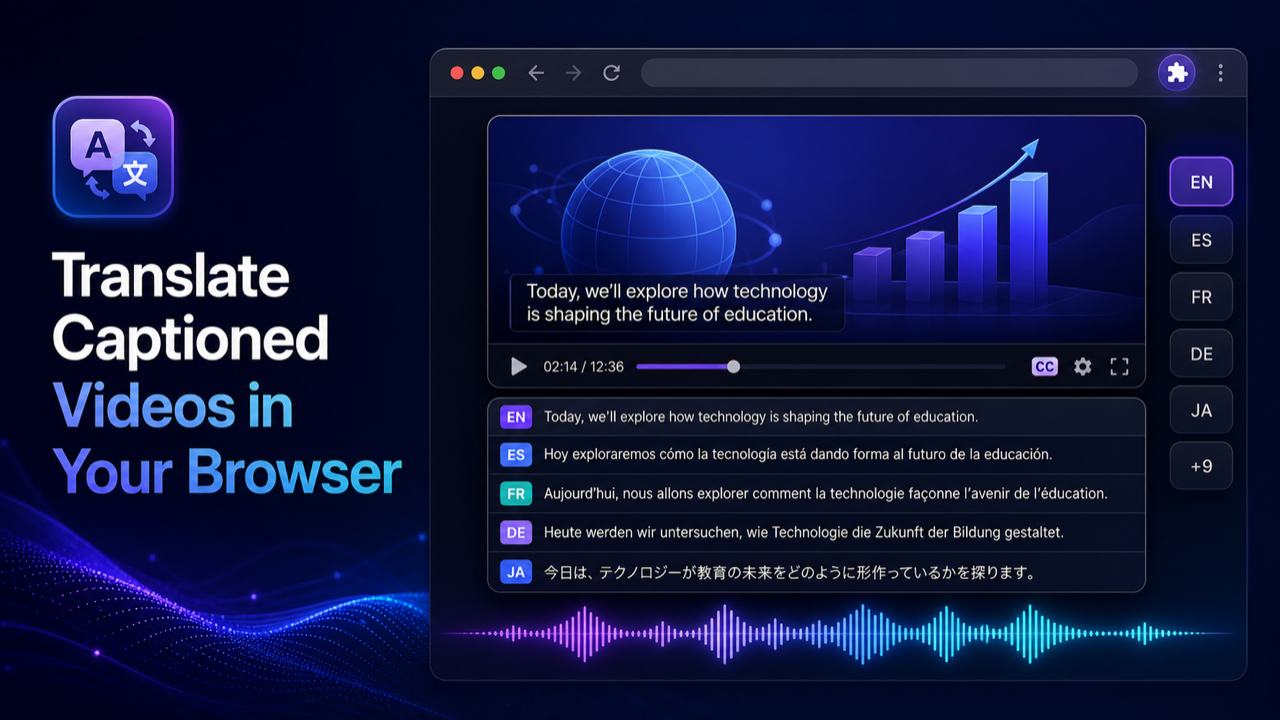
People type "Google Translate video" hoping to play a video and hear it in another language. It's a reasonable expectation. Google Translate handles text, documents, images, and even live speech, so surely video too? Not quite. Google Translate can't take a playing video and dub it for you. There's a real gap here, and this guide explains exactly where it is, then shows the honest way to close it: a Chrome extension that uses Google Translate under the hood and adds the audio and sync that Google Translate itself doesn't do.
What Google Translate actually does
Google Translate is genuinely good, within its lane. Paste or type text and you get an instant translation. Upload a document and download a translated copy. Point your camera or upload a photo and it translates the visible text. In the app, it can translate spoken words back and forth in a live conversation. And in Chrome, it can translate the text of a web page.
That last one trips people up, so it's worth being precise about.
The gap: it doesn't dub video
Here's what Google Translate does not do:
- It can't play a video and speak it in your language. There's no "translate this video's audio and dub it" mode.
- Page translation skips the video. When Chrome translates a page, it translates the surrounding text like menus, descriptions, and comments, but the video player is just an embedded object. The spoken audio inside it isn't touched.
- It doesn't translate captions in the player. Even if a video has a subtitle track, Google Translate's page tool won't rewrite those captions into your language as the video plays.
So if you paste a video's URL into Google Translate, or turn on Chrome's "translate this page" on a video site, the video itself stays in its original language. The gap is real: text, yes; a dubbed, synced video, no.
How to close the gap honestly
The practical fix is a Chrome extension that does the one thing Google Translate is missing, turning a playing video's words into translated audio and subtitles. And here's the honest part: it can use Google Translate under the hood for the text translation, then add the layers Google Translate doesn't provide. On the free tier you get Google-quality translation of the video's captions, AI voice output that speaks the translated text aloud in sync with the video, and real-time subtitles over the player in the language you pick.
In other words, it's essentially Google Translate's translation quality plus voice generation and playback sync on top. You're not replacing Google Translate; you're extending it to video.
What you get versus plain Google Translate
| Google Translate | Extension (using Google Translate) | |
|---|---|---|
| Translate text | Yes | Yes (captions) |
| Translate a web page's text | Yes | Yes |
| Dub a playing video's audio | No | Yes |
| Real-time subtitles on the player | No | Yes |
| Works on YouTube / Udemy / Coursera | Text only | Video too |
How to translate a video this way
- Install Unlimited Universal Video Translator. Add the Universal Video Translator to Chrome from the Web Store. It's free to start.
- Open a video with captions, a course, a talk, or a tutorial.
- Pick your language. Choose what you want to hear and read.
- Turn on dubbing, subtitles, or both. The free tier uses Google Translate for the text.
- Press play. The video's captions are translated and spoken in your language, synced to playback.
Tips
- Keep the original captions on for names, code, and technical terms, since Google Translate, like any machine translation, can miss those.
- Use both dub and subtitles for dense material so you hear and see the translation together.
- Pick a regional variant of your language for more natural-sounding audio.
- Upgrade to LLM translation if you want higher accuracy than Google Translate on nuanced or technical content. It's an optional paid tier.
Related guides
AI Video Translator covers the AI alternative to plain Google Translate. On Udemy the limits bite harder, and why Google Translate cannot dub a lecture works through them. The no-cost path is in the free caption-based translator guide.
Frequently asked questions
Can Google Translate translate a video?
It can translate text, documents, images, and live speech, but it can't take a playing video and dub its audio into another language. Chrome's page translation also handles only the surrounding text, not the video's spoken audio.
Why doesn't "translate this page" work on videos?
Chrome's page translation rewrites the text on the page, things like menus, descriptions, and comments, but the video player is an embedded object. The audio inside it and the captions in the player aren't part of the page text it translates.
How can I hear a video in my language then?
Use a Chrome extension that dubs the video. On its free tier it can use Google Translate for the text, then add AI voice and synced subtitles, the parts Google Translate itself doesn't provide.
Does the extension use Google Translate?
Its free tier uses Google Translate for the text translation, so you get Google-quality results, plus the voice output and playback sync layered on top. A premium LLM translation option is available if you want higher accuracy.
Which sites does it work on?
Standard video pages in Chrome that have captions, including YouTube, Udemy, and Coursera.
Is it free?
It's free to start, using Google Translate and a built-in voice. Premium translation and higher-quality voices are optional upgrades.