
Udemy Google Translate: Why It Fails & What Works
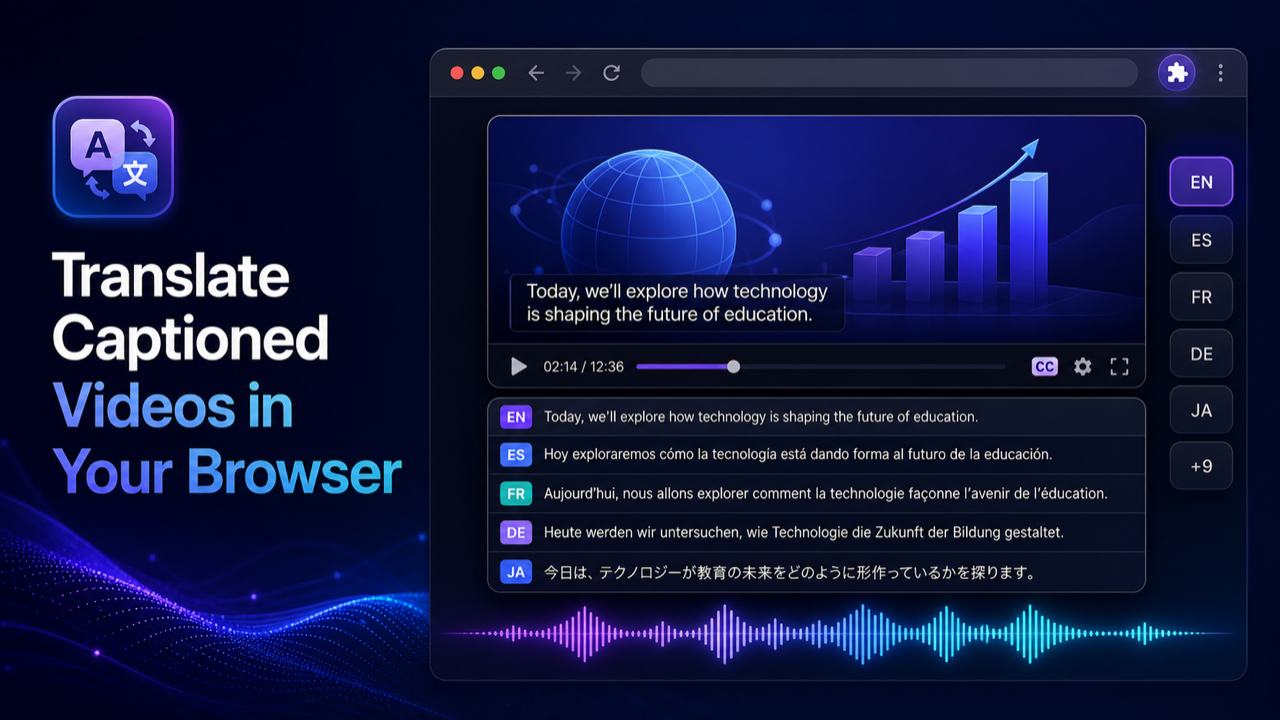
If you've tried to pair Udemy with Google Translate, you already know the two paths people take, and how both disappoint. Path one: copy the subtitles out, paste them into Google Translate, read the result, switch back to the video, rewind because you lost your place, repeat. Path two: turn on Chrome's "translate this page" on Udemy and discover it does nothing to the actual lecture. This guide explains why both approaches fall flat, and shows the clean fix, which is a Chrome extension that translates and dubs the course automatically, right on the page.
The two things people try
Copy-pasting subtitles into Google Translate
You open the transcript, select a chunk, paste it into Google Translate, and read the translation in another window. It technically works, but:
- It breaks the flow. You're constantly switching between the video and the translation tab, losing your place in both.
- You do it in chunks forever. A two-hour course is a lot of copy, paste, read, rewind.
- There's no audio. You read the translation; you never hear the lecture in your language.
- Context gets lost. Pulled out of the video, a line of transcript loses the visual it referred to.
Using Chrome's "translate this page" on Udemy
This one feels like it should work, and then it doesn't:
- Page translation only touches text. Chrome translates the menus, titles, and descriptions around the player, not the lecture.
- The video is an embedded object. Its spoken audio isn't page text, so translation skips it entirely.
- The captions in the player aren't rewritten. Even the subtitle track shown over the video stays in the original language.
So "translate this page" leaves you with a translated interface wrapped around a lecture that's still in its original language. Not what you needed.
Why Google Translate can't dub a Udemy lecture
Google Translate is built for text, documents, images, and live speech, not for taking a playing video and speaking it aloud in your language. A Udemy lecture is video: the words are in the audio, and the captions live inside the player. Neither is the kind of page text Chrome's translation tool operates on. There's simply no "dub this video" mode in Google Translate, which is why every workaround feels like fighting the tool.
The clean fix: an extension that dubs and subtitles
Instead of wrestling Google Translate into a job it wasn't built for, use a Chrome extension that runs directly on the Udemy page. It reads the lecture's captions and gives you two things the copy-paste route can't. The first is AI-dubbed audio: the lecture spoken aloud in your language, synced to the video, so you can watch the screen instead of reading. The second is clean translated subtitles in any language you pick, even when Udemy's own dropdown doesn't offer yours.
And the honest detail: on its free tier the extension can use Google Translate for the text, so you get the same translation quality you were copy-pasting for, minus all the copy-pasting, plus voice and sync on top.
How to translate a Udemy course the easy way
- Install the extension. Add Video Translator for Udemy - Unlimited AI Voice Dubbing to Chrome from the Web Store. It's free to start.
- Open your Udemy course and go to any lecture. Log in as normal, since it works inside your own session.
- Pick your target language. Choose what you want to hear and read, including languages the course never offered.
- Turn on dubbing, subtitles, or both. Listen, read, or do both together.
- Generate the selected voice track, or use browser speech where available, then press play with translated captions enabled.
No more switching tabs, no more losing your place, no more copy-paste.
Tips for the best results
- Use both dub and subtitles for technical courses, since hearing the concept and seeing the translated term helps the vocabulary stick.
- Keep the original captions handy for names, code, and command-line snippets, which are best read in the source language.
- Pick the closest regional variant of your language for more natural audio.
- Your settings carry over between lectures, so you set it up once per course.
Related guides
Follow the complete Udemy course translation tutorial. For the general limits of Google Translate on video, read Google Translate Video. To compare platforms, see translating Coursera lectures.
Frequently asked questions
Can I use Google Translate on Udemy videos?
Not for the lecture itself. You can copy subtitles into Google Translate manually, but Chrome's page translation only handles the text around the player, not the video's audio or captions. A dubbing extension is the practical way to translate the lecture.
Why doesn't "translate this page" work on Udemy?
Chrome's page translation rewrites page text like menus, titles, and descriptions, but the lecture is an embedded video. Its spoken audio and in-player captions aren't page text, so they're left untranslated.
What's better than copy-pasting subtitles into Google Translate?
A Chrome extension that reads the lecture's captions and translates them in place, showing subtitles and dubbing the audio in your language. It removes the tab-switching and rewinding, and on its free tier can still use Google Translate for the text.
Can I hear a Udemy lecture in my language, not just read it?
Yes. The extension's AI dubbing plays the lecture aloud in your language, synced to the video, so you can watch the screen instead of reading captions the whole time.
Will using an extension affect my Udemy account?
It runs in your own browser on top of your normal Udemy session, like any reading or accessibility tool. It doesn't download the course or share your login. It only changes how the lecture is presented to you.
Is it free?
It's free to start, using Google Translate and a built-in voice. Premium LLM translation and higher-quality voices are optional paid upgrades.