
Video Translator Chrome Extension for Captions
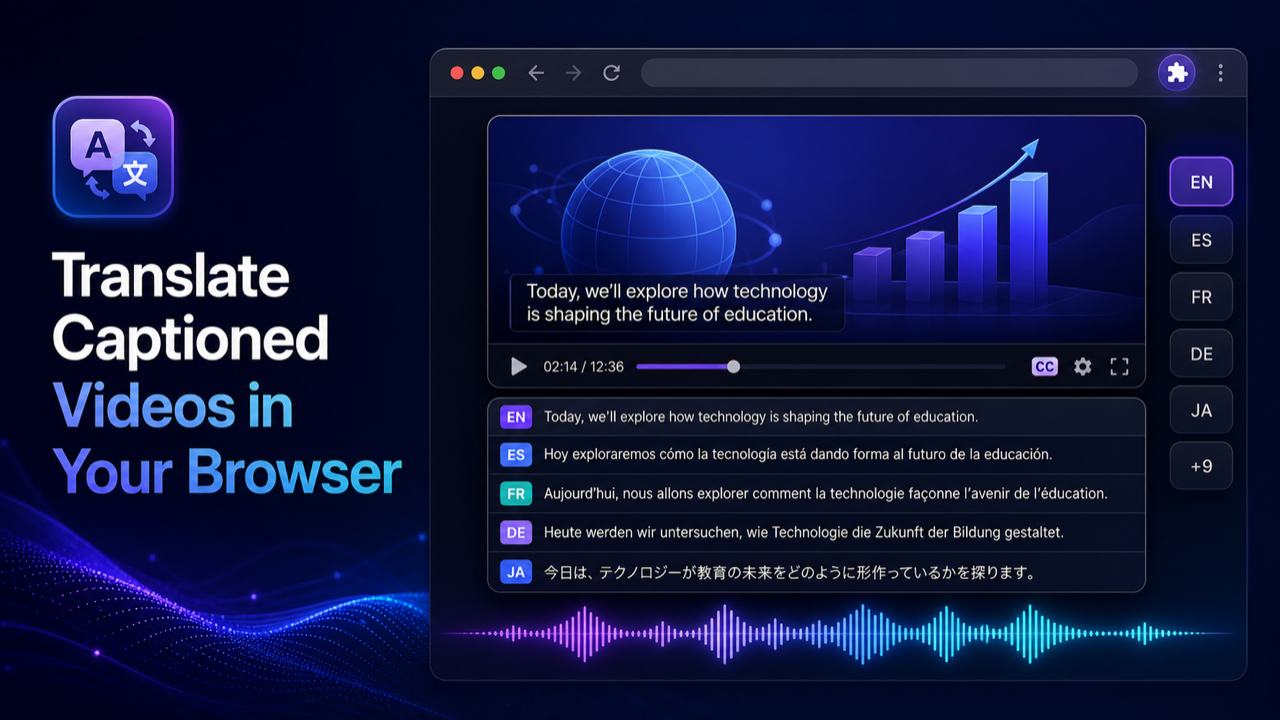
A video translator Chrome extension solves a specific, common annoyance: you found a great video, but it is in a language you do not speak, and you do not want to leave the page to fix that. Instead of downloading the file and uploading it somewhere, you add one extension and the translate controls appear right on the video player.
This post explains how a browser-based video translator works, why the extension approach beats the upload-a-file websites for watching content, and how to set it up in a couple of minutes.
Why put a video translator inside the browser?
The old way of translating a video is clumsy. You download the video, re-upload it to a web app, wait in a processing queue, then download a dubbed copy and play it in yet another window. For a video you did not make and just want to watch, that is far too much friction.
A Chrome extension removes all of it. Because it runs inside the tab, it can see the video and its captions directly, so there is nothing to export or upload. It adds controls onto the player itself, a small floating Dub button on each detected video, and plays the dubbed audio over the video in place, syncing it and lowering the original audio underneath. It also keeps per-video settings, so two different videos do not share the same language or voice.
You stay on the same page you were already watching. That is the whole appeal.
Installing and setting it up
Getting the Unlimited Universal Video Translator extension running takes about two minutes:
- Add it to Chrome from the Chrome Web Store. It installs like any other extension.
- Open a video that has captions, whether that is YouTube, a lecture on Udemy or Coursera, or a standard HTML5 player.
- Turn on captions in the player if they are off. The extension works from the caption track the page exposes, so it needs to detect one.
- Click the floating Dub button on the video, then choose a target language, mode, speech engine, and voice.
- Press play. The translated speech is generated, synced, and played while the original audio is ducked down. Prefer reading? Switch to translated subtitles instead.
There is no separate app to open and no account required to start on the free path.
What the free extension includes
The free path is a complete workflow, not a teaser:
- Google Translate for the caption text, with no API key needed.
- An on-device voice that runs inside the browser extension to speak the translation, instead of sending it to a paid remote service.
- AI dubbing or translated subtitles, chosen per video.
- No watermark and no forced upload.
PRO adds engines for heavier users, including premium local voices, cloud voices, a faster real-time mode, and smarter LLM translation, but the free path stands on its own.
Where the extension has limits
Because it works from captions the page provides, there are a few boundaries worth knowing up front:
- Captions are required. No captions, live streams, and DRM-protected videos may not work.
- Turn captions on first. If the site hides them in a way the extension cannot detect, dubbing will not start.
- Free voices are limited. The on-device catalog does not cover every language and voice style. Premium and cloud voices extend that on PRO.
For most educational and informational videos, captions exist, so the extension works out of the box.
Is a browser extension safe for this?
A reasonable question. The extension processes captions and generates the dubbed track without uploading your video anywhere. On the free path, the on-device voice runs locally in your browser rather than sending speech generation to a remote server. Where a mode does use an external provider, such as the translation route or optional cloud voices, that is clearly marked, so you always know when text leaves your device.
Related guides
AI Video Translator explains what the extension does with a caption track once it is installed. The two most common uses have their own guides: YouTube and translating Udemy courses. Free Video Translator covers what costs nothing, and the real-time mode comparison covers what does not.
Frequently asked questions
How do I add a video translator to Chrome?
Install the extension from the Chrome Web Store. Once added, a floating Dub button appears on detected videos, and you translate and dub them right in the player.
Does the Chrome extension work on YouTube?
Yes. It works on YouTube and other sites, including course platforms like Udemy and Coursera, as long as the page provides captions the extension can detect.
Do I have to upload my video?
No. The extension reads the captions the page already exposes and plays the dubbed audio over the video in place. The video file is not uploaded or downloaded; an online translator still receives the caption text it needs.
Is the Chrome extension free?
Yes. The free path uses Google Translate and an on-device voice, with no account and no watermark. PRO adds premium voices, cloud voices, real-time mode, and LLM translation.
Why is the Dub button not appearing?
The extension needs a detectable video with captions. Turn captions on in the player first. On live streams, DRM-protected video, or pages with no captions, the button may not appear.
Does it slow down my browser?
The extension only activates on videos you choose to dub, and works from caption text rather than the full video file, so the overhead is small. On the free path the voice runs locally, which keeps everything in your browser.